Loading
By Latha Kumaresan · DirectorReviewed 23 September 2026
Why this exists
Why marketing reports on the wrong number
Because marketing reports leads and finance reports revenue, and the two are never the same shape. A channel producing many cheap leads outranks one producing three deals that pay for the year.
What it does
How the source is carried
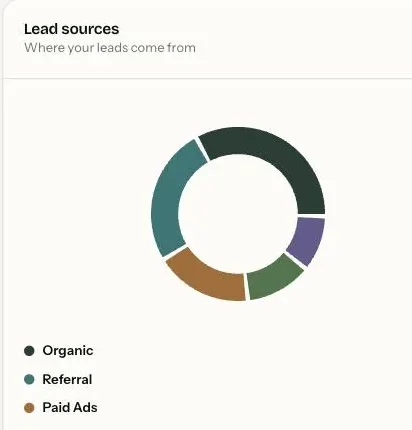
Source tracking keeps the UTM parameters, referrer and campaign that produced a lead, and carries them through contact, deal and — when the deal closes — the revenue Books recognises.
The source travels with the record rather than being re-derived. Any report that can group by revenue can group by the source that produced it, without exporting two systems and joining them by hand.
In practice
A channel that looked good and was not
A channel delivering 40% of leads produced 6% of closed revenue. A guide delivering 9% of leads produced 31%. Both facts were available in one report the week source tracking reached Books.
Specifics
ReadsUTM, referrer, campaign, spend where given
WritesSource on lead, deal and revenue
PermissionsInherits record visibility
What it does not do
It records where a lead came from, not why they bought. Attribution is evidence for a decision about spend; it is not a causal account of the sale.
How it connects
See the Flow journeys →What else reads the source
Growth reports channel performance against it, Books attributes recognised revenue, cohort analysis groups deals by acquisition source, and segments filter on it.
Setting it up
Flow · Moving your pipeline in takes four days.Day 1Decide the stagesBefore any import. Stage names are the one thing here that is genuinely painful to change in month three.
Day 2Import into a sandboxDeals, contacts and three years of closed history, mapped and checked before anybody logs in.
Day 3Wire the routingForms, inbox and owner rules, so a new lead lands on a person rather than in a queue nobody reads.
Day 4Let the team inSales first, then whoever reads the forecast. The old CRM stays readable for a month.
Does it work for offline sources?
Yes. Source is a value on the record, so events and referrals are recorded the same way.
Does it survive a merge?
Yes. Merged records keep every contributing source.
Can we see cost per closed deal?
Yes, where you supply the spend. Treepie supplies the revenue side of the ratio.
More in Lead capture & routing
Full feature list →Lead capture & routingWeb formsA web form, embedded on your site or hosted by Treepie, writes directly to the lead record with its source, the page it sat on and any consent it captured.Lead capture & routingLanding page captureLead capture & routingRouting rulesLead capture & routingLead scoringLead capture & routingAssignment queuesLead capture & routingDuplicate merging
Easier to see Source tracking running on your own records than to read about it.
Fourteen days, every module, no card. Or half an hour with someone who will run it on your own records and tell you where it does not help.